CADRBIO Carlos Andrés Díaz Rodríguez — Host–Microbe Metabolic Interactions
Universe of equations

Hi, I am Andrés!

I am a Microbe-Hunting Engineer & Systems Biologist

Building a genome-scale metabolic model and growing a bacterium in a flask are usually two different people's jobs. I do both. Right now that means Drosophila melanogaster and Wolbachia, investigating how microbes reshape host metabolism. Before that, I described novel bacterial taxa from a lignocellulose-degrading consortium and traced their chemistry to plastic-degrading potential.

Alongside research, I enjoy helping other scientists cross disciplinary boundaries. I built and taught the computational component of an undergraduate biotechnology course for students coming from a bench-science background, introducing them to sequence analysis and protein structure. I have also co-directed an undergraduate thesis.

I'm a PhD Candidate in Integrative Biology and Biomedicine under the supervision of Dr. Luís Teixeira at Católica Biomedical Research Center (CBR), Dr. Karina Xavier at the Gulbenkian Institute for Molecular Medicine (GIMM), and Dr. Maria Zimmermann-Kogadeeva at the European Molecular Biology Laboratory (EMBL). I trained in Colombia and have since worked in Portugal and Germany, across different research environments and in Spanish, Portuguese, and English.

Research Interests

I work at the intersection of wet-lab microbiology and computational modeling — using genomics and metabolic modeling together to explain mechanistically how microbes shape host biology, rather than just cataloguing who is there.

  • Metagenomics & MAG Recovery
  • Genome-Scale Metabolic Modeling
  • Host–Microbe Metabolic Interactions
  • Microbial Genomics & Taxonomy

Publications

Featured Publications:

Novel bacterial taxa in a minimal lignocellulolytic consortium and their potential for lignin and plastics transformation

Key findings:

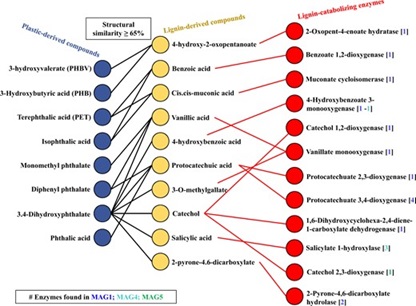
We reconstructed the complete, high-quality genomes of the three dominant members of a Minimal Microbial Consortium (MELMC) via PacBio-HiFi sequencing, two of which were characterized as novel bacterial taxa, with potential to break down plastics, based on shared chemical features with lignin-derived compounds.

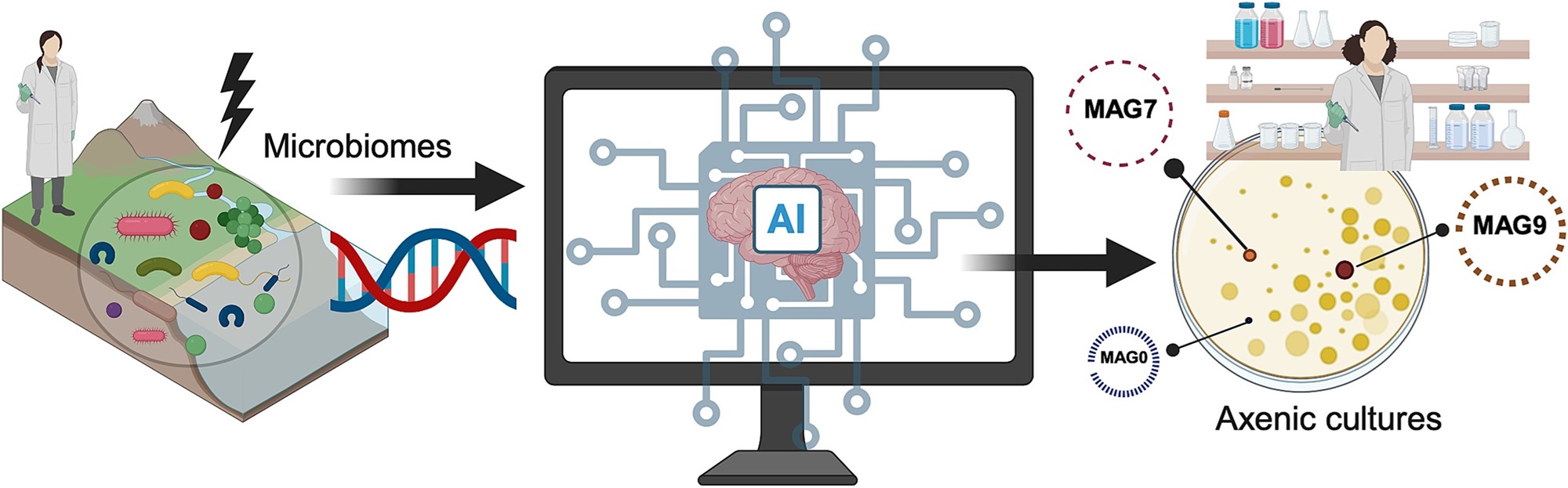
Discovery and cultivation of prokaryotic taxa in the age of metagenomics and artificial intelligence

Key finding:

We propose a conceptual framework linking microbiome perturbation, genome-based trait inference, culture-media design, metabolic modeling and AI-driven prediction to move uncultured prokaryotic taxa toward targeted, hypothesis-driven cultivation.

For the complete list, see Google Scholar.

Technical Expertise

I combine wet-lab multi-omics with computational modeling moving across the full pipeline: from raw sequencing data to mechanistic, testable metabolic models.

  • Host–Microbe Systems Biology — Dual RNA-seq, differential expression analysis, functional enrichment, statistical modeling in Python & R, HPC/SLURM workflow development.
  • Microbial Genomics — Single-genome and metagenome-assembled genome (MAG) assembly, annotation, and analysis using Illumina, Oxford Nanopore, and PacBio sequencing.
  • Genome-Scale Metabolic Modeling — Genome-scale metabolic modeling with COBRA, CarveMe, Gapseq, and iMAT.
  • Chemoinformatics — Molecular fingerprinting (SMILES, Tanimoto similarity), RDKit, network-based analysis — applied in my ISME Communications paper to link microbial degradation potential to lignin-derived chemical structures.

Service & Mentoring

The part of science I find most rewarding is helping others move from learning techniques to asking their own questions. I enjoy showing how computational approaches can open new ways of thinking about biological problems and helping researchers become more independent in how they approach them.

Peer review

Peer Reviewer | Bio-protocol Journal

Invited as a PhD candidate to peer-review protocols spanning genomics, transcriptomics, and genome-scale metabolic modeling.

Teaching & Mentoring

Bloque Neon

Invited Lecturer | Introduction to Biotechnology

As a master's student, I was invited to develop and deliver the computational component of a senior undergraduate course. The students were primarily trained at the bench, so I designed the sessions to introduce computational biology from the ground up, taking them through their first sequence analysis, protein structure visualization, and molecular modeling.

Undergraduate Thesis Co-Direction

While completing my own master's, I co-directed an undergraduate research project on the top-down and bottom-up construction of microbial consortia for lignocellulose degradation. The student went on to pursue a master's in Environmental Management.

Undergraduate Thesis Co-Direction

While completing my own master's, I co-directed an undergraduate research project on the top-down and bottom-up construction of microbial consortia for lignocellulose degradation. The student went on to pursue a master's in Environmental Management.

News & Media

Hipótesis magazine feature on plastic-degrading bacteria

Featured in Hipótesis
(in Spanish)

The magazine covered my first-author study in ISME Communications: a new bacterial genus with lignocellulolytic potential, and a consortium member able to convert PET-derived aromatics into biodegradable polymers.

Instituto Serrapilheira alumnus feature

Featured by Instituto Serrapilheira
(in Portuguese)

Where a scientist comes from shapes how they engage with science and the scientist they become. Serrapilheira featured my argument for this as an alumnus of its 2021 ICTP-SAIFR Training Program in Quantitative Biology and Ecology.

Contact

Rua da Quinta Grande 6
2780-156 Oeiras
Portugal

email: carlos.rodriguez@gimm.pt | crodriguez@ucp.pt

Gulbenkian Institute for Molecular Medicine logo Católica Biomedical Research Centre logo